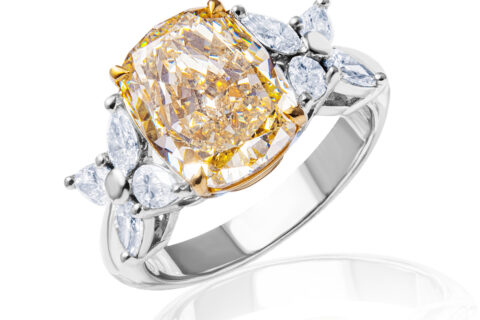
Presented by Lincoln Pawn in Anaheim, CA
Diamonds have captivated people for thousands of years, not just for their sparkle but for the symbolism they carry—love, commitment, celebration, and achievement. Whether you’re shopping for an engagement ring, upgrading your jewelry collection, or looking for a meaningful gift, understanding what gives a diamond its beauty (and its value) is incredibly important.
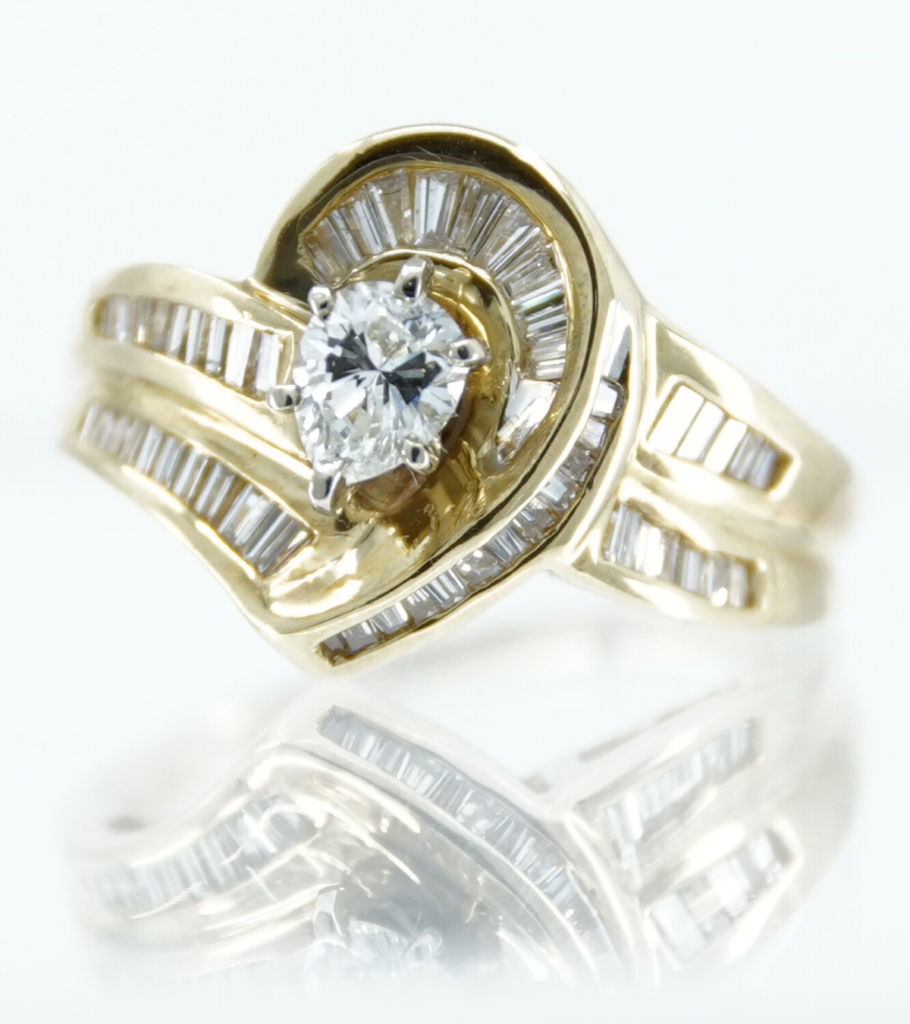
Two of the biggest factors that influence a diamond’s appearance and price are clarity and color. These qualities determine how brilliant, bright, and valuable a diamond truly is. The good news? You don’t need to be a gemologist to make a smart, confident purchase. With a little knowledge—and the right pawn shop behind you—you can find exceptional diamonds at exceptional prices.
At Lincoln Pawn in Anaheim, CA, we help customers every day choose pre-owned diamonds that look stunning, suit their style, and fit their budget. Here’s a simple, helpful breakdown of clarity and color and how to use these factors when shopping smart.
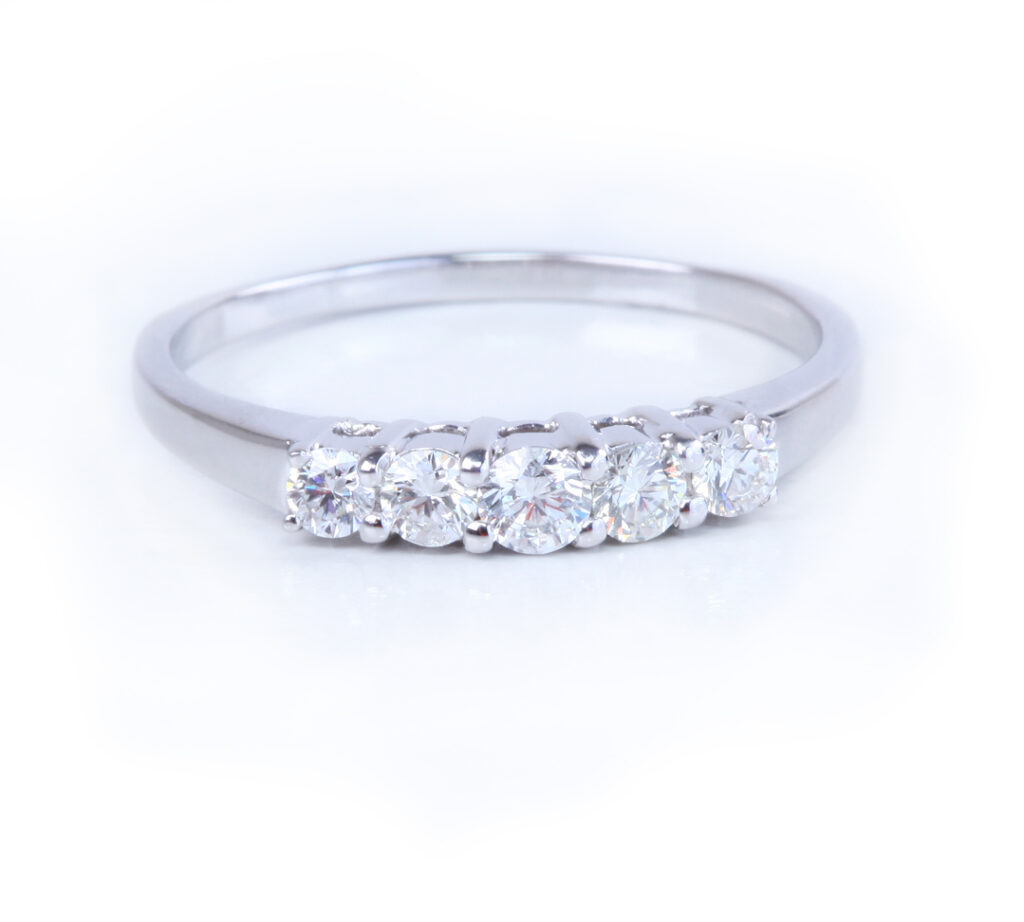
Why Clarity Matters (But Not Always How You Think)
Clarity refers to the presence of natural imperfections inside or on the surface of a diamond. These are called inclusions (internal characteristics) and blemishes (external marks). Nearly all diamonds have some imperfections because they are formed deep within the Earth under intense pressure. The key idea is this:
Clarity only matters if the inclusions affect the diamond’s appearance.
The Clarity Scale (Simple and Straightforward)
The Gemological Institute of America (GIA) created a standardized clarity grading scale:
- FL (Flawless) – No internal or external blemishes.
- IF (Internally Flawless) – No internal inclusions.
- VVS1 – VVS2 (Very Very Slightly Included) – Tiny inclusions very hard to see under 10x magnification.
- VS1 – VS2 (Very Slightly Included) – Minor inclusions difficult to see under magnification.
- SI1 – SI2 (Slightly Included) – Inclusions noticeable under magnification but usually not to the naked eye.
- I1 – I3 (Included) – Inclusions are easily seen, may impact durability or brilliance.
The Smart Shopper’s Clarity Sweet Spot
Here’s something even many jewelers don’t say out loud:
Most buyers don’t need a flawless diamond.
They need a diamond that looks flawless.
Your goal is to choose a diamond with no visible inclusions to the naked eye, which experts call “eye clean.”
For most shoppers, the best value lies in:
- VS1 or VS2 (looks high-end, saves hundreds or thousands)
- SI1 (many are eye-clean but far more affordable)
Instead of paying for perfection you can’t see, pick clarity that gives you beauty and value.
At Lincoln Pawn, our team carefully inspects every diamond—so when something is eye-clean, you’ll know for sure.
Diamond Color: Why Less Is More
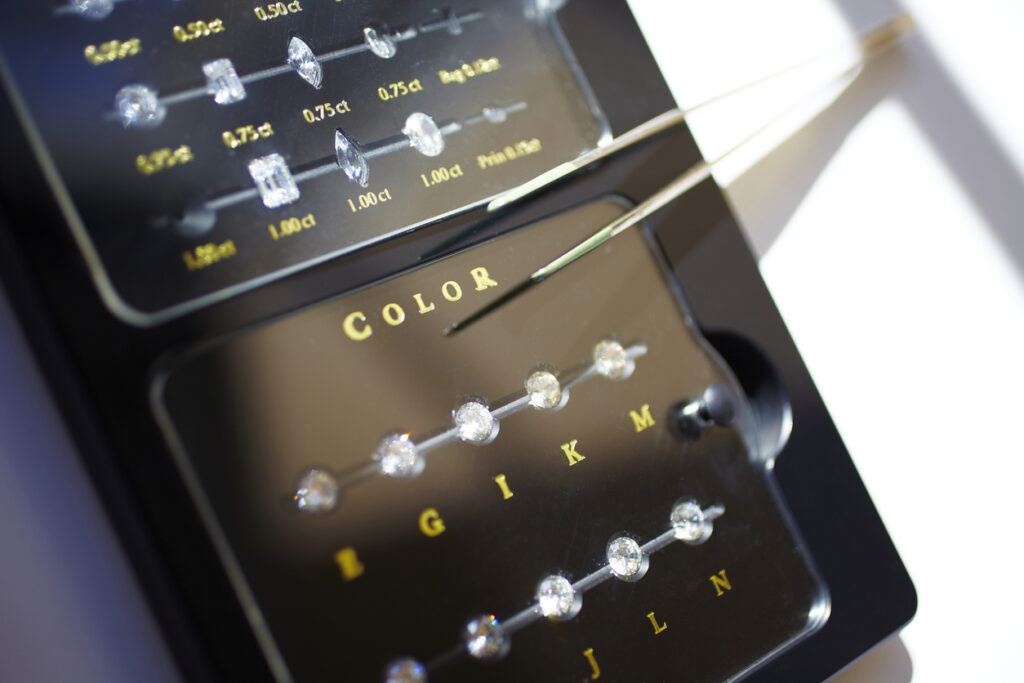
While clarity deals with imperfections, color is about presence of a warm or yellow tint. Diamonds are graded on a scale from D (colorless) to Z (light yellow/brown). In this scale, less color means higher value.
Color Grades Explained
- D – F → Colorless
Brightest and purest; extremely rare. - G – J → Near Colorless
Almost no visible color, great value, looks amazing once set. - K – M → Faint Color
Light tint visible, especially in larger stones. - N – Z → Noticeable Color
Darker tints; often used for vintage styles or alternative designs.
The Color Grades That Look Best in Real Life
Here’s the insider tip:
Most shoppers choose diamonds between G and J because they appear bright and colorless once mounted in a ring.
These grades deliver the ideal mix of beauty and affordability—especially in white gold or platinum settings.
If you prefer yellow gold, you can go slightly lower in color (J–K) because the warm tone blends with the metal.
Lincoln Pawn offers diamonds across many color grades, and we walk you through how each one looks in the real world—not just on paper.
Clarity vs. Color: Which Matters More?
Both are important, but the average shopper will see color differences more easily than clarity differences.
A great rule of thumb:
Prioritize color over clarity unless the clarity flaws are visible.
A diamond with a tiny inclusion (that no one can see) will look better than a diamond with a visible yellow tint.
For example, a G/SI1 diamond will generally look brighter and more appealing than a J/VS1 diamond.
At Lincoln Pawn, we help you identify the best balance so you get maximum sparkle without overspending.
How Cut Influences Clarity and Color
Before diving deeper, it’s important to note that:
Cut is the biggest factor in a diamond’s sparkle.
Why mention this in a clarity and color guide?
Because a well-cut diamond reflects light better, making:
- Inclusions less visible
- Color less noticeable
- Sparkle more intense
This means that:
- A diamond with slightly lower clarity can still look stunning
- A diamond with a bit more color can still appear bright
- A diamond with an excellent cut can “forgive” other imperfections
At Lincoln Pawn, we always recommend prioritizing cut quality—and we inspect diamonds to make sure you are getting the brilliance you expect.

How Carat Weight Affects Perception of Clarity and Color
Larger diamonds show flaws and color more easily.
Here’s what to consider:
- In diamonds under 1 carat
You can often choose lower clarity (SI1 or SI2) and lower color (J or K) and still get a gorgeous look. - In diamonds around 1–2 carats
Color becomes more noticeable. G–I is usually the sweet spot. - In diamonds over 2 carats
Small imperfections or slight color become obvious.
Aim for VS clarity and G–H color or better.
Lincoln Pawn has diamonds in many sizes—and can help you pick the right balance for your carat range.
How Metal Color Influences Diamond Color
The ring’s metal plays a big role in how the diamond’s color looks:
White Gold or Platinum
- Shows color the most
- Pairs best with diamonds graded D–I
Yellow Gold
- Hides color
- Makes J–K look nearly colorless
Rose Gold
- Also hides color
- Allows you to spend less on color grade without sacrificing beauty
We love showing customers how a diamond looks in different settings—because what matters most is how it appears to you, not what the paper says.
Tips for Choosing the Right Clarity and Color for Your Needs
1. Decide What Matters Most
Are you focused on sparkle, price, size, or purity?
Your priorities can help determine the best clarity and color balance.
2. Look at the Diamond in Person
Lighting affects how you perceive clarity and color.
At Lincoln Pawn, you can view diamonds under magnification and natural light.
3. Choose Eye-Clean Over Perfect
If you can’t see the inclusions without magnification, clarity beyond that point may not be worth the extra cost.
4. Don’t Overpay for “Name-Brand” Grades
Some grades sound impressive (like VVS1 or E color), but visually, they may not look different from more affordable options.
5. Consider Shape
Different diamond shapes hide imperfections differently.
- Round cuts hide both color and clarity best.
- Emerald cuts show imperfections more because of their long, open facets.
- Oval, marquise, and pear shapes can show color at the tips.
- Princess cuts can hide inclusions fairly well.
6. Trust Your Eyes
Sometimes a slightly lower-grade diamond looks better than a higher-grade one due to placement and cut.
At Lincoln Pawn, we encourage customers to compare options side-by-side for the clearest understanding.
Why Buying a Diamond at Lincoln Pawn in Anaheim Makes Sense
When you’re shopping for a diamond, you want beauty, value, and confidence. Buying pre-owned diamond jewelry from Lincoln Pawn offers several advantages:
1. Better Prices Than Retail
Pre-owned diamonds can cost 30–60% less than new ones, even though diamonds themselves don’t “wear out.”
2. Quality You Can See and Verify
We inspect every diamond for:
- Cut
- Clarity
- Color
- Carat
- Condition
- Authenticity
We take the time to explain what you’re looking at so you know exactly what you’re buying.
3. A Rotating and Unique Selection
Unlike traditional jewelry stores that carry mass-produced designs, pawn shops often have:
- Vintage pieces
- Antique settings
- Hard-to-find cuts
- Designer styles
- Incredible estate jewelry
If you love one-of-a-kind pieces, you’ll enjoy the variety.
4. The Ability to Sell or Trade-In
Want to upgrade?
We offer excellent prices if you ever choose to sell or trade your diamond.
5. A Trusted Local Source
Lincoln Pawn has served the Anaheim community for years, offering friendly service, honest pricing, and expert guidance.
How to Shop at Lincoln Pawn for the Best Diamond
Here’s what to do when you visit:
1. Bring Your Budget
We help you stay within it while finding maximum value.
2. Tell Us What You Prefer
Whether you love vintage, modern, simple, or ornate designs, we’ll help match your style.
3. Compare Several Diamonds
Seeing them side by side will help you understand color and clarity instantly.
4. Ask About Certification
We carry many diamonds with professional grading reports and can provide detailed inspections.
Final Thoughts
Understanding clarity and color is one of the best ways to make a smart diamond purchase. You don’t need the highest grades—you just need the right combination that creates a beautiful, bright, eye-catching diamond that matches your personal taste.
Lincoln Pawn in Anaheim, CA is here to make that process easy, transparent, and enjoyable. Whether you’re shopping for an engagement ring, upgrading your jewelry, or simply exploring your options, our team is ready to show you stunning diamonds that deliver exceptional value.