When you’re sifting through a jar of old coins, a handful of U.S. half dollars might not look like much at first glance. But for anyone interested in precious metals, antiques, or simply cashing in on hidden value, those half dollars could be worth far more than their face value of 50 cents.
This guide walks you through everything you need to know about silver half dollars — how to identify them, understand their silver content, calculate their intrinsic value, and navigate selling them at a trusted local buyer like Lincoln Pawn in Anaheim, CA.
Whether you’re a beginner collector, a curious homeowner, or someone looking to turn forgotten coins into real cash, this detailed article will give you the clarity and confidence you need.
Why Silver Half Dollars Matter
Unlike modern coins made of cheaper metals, certain U.S. half dollars minted in the past contain actual silver. Because silver is a precious metal with real market value, these coins can be worth many times more than 50 cents.
But not all half dollars are created equal — knowing which ones contain silver and how much they’re worth is key.
The Importance of Silver in Coins
Silver was once widely used in U.S. coinage, not just for its beauty but because it held real economic value. As metals markets changed and silver became more expensive, the U.S. Mint gradually shifted away from silver coinage to cheaper metal mixtures. That history directly affects how much your coins are worth today.
Here’s the simple rule:
- Half dollars minted in 1964 or earlier contain 90% silver.
- Half dollars minted between 1965 and 1970 contain 40% silver.
- Half dollars minted after 1970 contain no silver at all.
This distinction alone can turn a handful of trash into treasure.
Identifying Silver Half Dollars
Before you can figure out what your half dollars are worth, you need to know which ones actually contain silver.
Here’s how to tell:
1. Check the Date
The date stamped on the coin’s face tells the most important part of the story.
- Pre‑1965 coins (including Barber, Walking Liberty, Franklin, and early Kennedy designs) are 90% silver.
- 1965–1970 Kennedy half dollars are made of 40% silver.
- Post‑1970 coins have no silver and are made of a copper‑nickel clad.
This date check alone is the quickest way to separate valuable silver coins from their low‑value modern counterparts.
2. Look at the Edge
Older silver coins have a smooth edge without any lettering. Modern clad coins often have the phrase “Half Dollar” stamped continuously around the rim.
3. Listen and Feel
Many collectors use a simple trick: gently tap the coin and listen for a clear, ringing “ping” — a sound characteristic of silver. While not scientific, this method can help you spot silver coins by feel.
A Peek at Historic Half Dollar Series
Over the years, the U.S. Mint released several iconic half dollar designs, many of which are beloved by collectors today:
• Barber Half Dollar (1892–1915)
This is one of the earliest widely circulated silver half dollar designs. With 90% silver content, it was a true piece of everyday money — until the early 20th century.
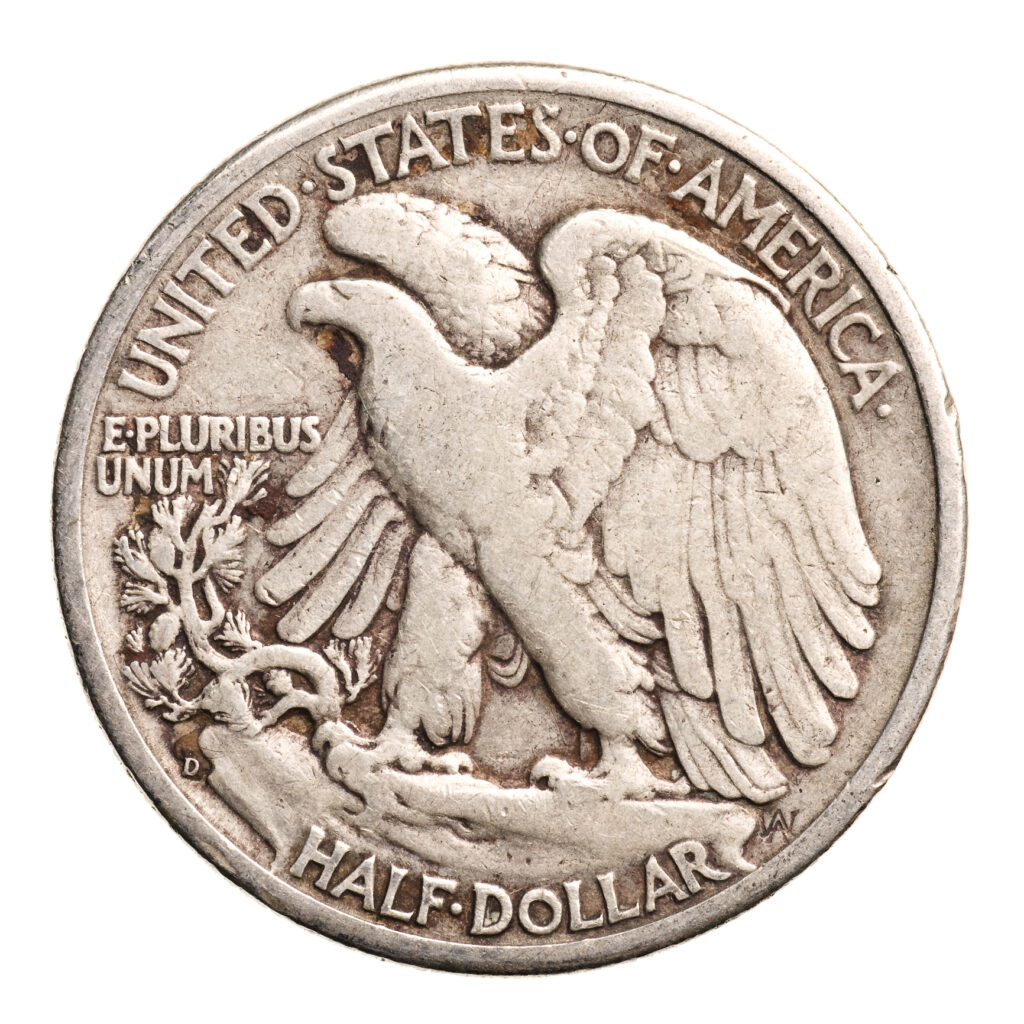
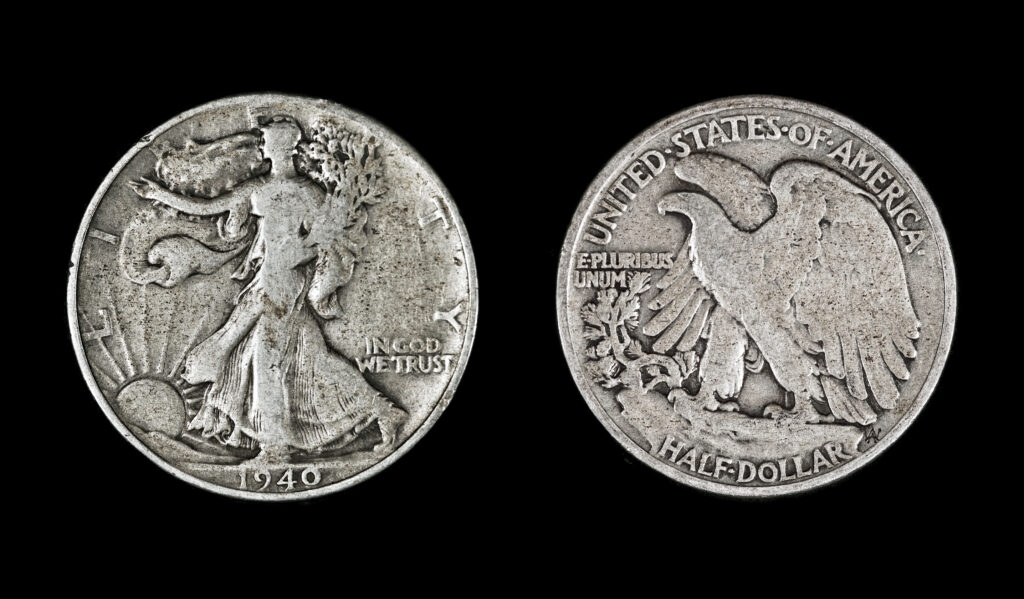
• Walking Liberty Half Dollar (1916–1947)
Many coin enthusiasts consider this one of the most beautiful U.S. coins ever produced. Featuring Lady Liberty striding toward the rising sun, it’s both aesthetically striking and rich in metal value.
• Franklin Half Dollar (1948–1963)
Named to honor Founding Father Benjamin Franklin, this series marked the last broad run of 90% silver half dollars before the dramatic transition in the 1960s.
• Kennedy Half Dollar (1964)
Minted immediately after President Kennedy’s assassination, this coin is significant both historically and for its silver content. The 1964 Kennedy half dollar is especially valuable because it’s the last year full 90% silver composition was used before the first reduction in silver content.
The Transition to 40% Silver Coins (1965–1970)
In the mid‑1960s, rising silver prices made 90% silver coins expensive to produce. The U.S. Mint responded by lowering the silver content, introducing a 40% silver clad composition in half dollars struck from 1965 to 1970.
These coins still contain real silver — just less of it:
- Outer layers were made of 80% silver and 20% copper
- Core layers were mostly copper
- Overall: roughly 40% silver by weight
While these coins aren’t worth as much as the older 90% coins, they still have intrinsic value above face value, especially in today’s silver market.
How Much Silver Is Really in These Coins?
Understanding the exact silver content helps you estimate melt value — the worth of the precious metal inside the coin.
Here’s a general breakdown:
| Coin Type | Silver Content | Approx. Pure Silver (troy oz) |
|---|---|---|
| Pre‑1965 Half Dollars (90% silver) | 90% | ~0.3617 oz |
| 1965–1970 Half Dollars (40% silver) | 40% | ~0.1479 oz |
| Post‑1970 Half Dollars (clad) | 0% | 0 oz |
Once you know the pure silver weight, the next piece of the puzzle is silver’s current market price—often called the spot price.
For example:
- If silver is trading at $30 per troy ounce, a 90% silver half dollar’s melt value would be:
0.3617 oz × $30 = $10.85
This simple calculation gives you a baseline for what the silver alone is worth — and keep in mind, collectors may pay even more for rare dates or coins in excellent condition.
Melt Value vs. Collectible Value: What’s the Difference?
It’s important to understand that a coin’s actual worth isn’t just the metal inside it.
Melt Value
This refers strictly to the value of the precious metal (silver) in the coin, based on current market pricing.
Collector Value (Numismatic Value)
Some coins are valuable because of rarity, age, historical significance, or condition — not just silver content.
For example, a pristine 1916 Walking Liberty half dollar may be worth far more than its silver melt value because collectors place a premium on its design and scarcity.
At Lincoln Pawn, we consider both aspects — metal and collectible interest — in our evaluations, so you get a well‑rounded offer. This ensures you’re paid fairly whether you’re selling for metal value or as a collector’s item.
Why Anaheim Collectors Should Get Professional Evaluations
If you’ve pulled silver half dollars from grandpa’s old coin jar or inherited a box of mixed currency, waiting for a professional evaluation is one of the smartest moves you can make.
Here’s why:
• Precision and Accuracy
Experts have tools and knowledge to identify subtle details — including mint marks, askew dates, or worn features — that can dramatically affect value.
• Real Market Insight
The value of precious metals and coins changes with market conditions. Local evaluators can factor in current pricing, demand, and trends specific to Anaheim and Southern California markets.
• Immediate, Transparent Offers
Walking into a trusted pawn or coin shop means you can get an offer on the spot — without the waiting, shipping costs, or uncertainty of internet sales.
Selling Silver Half Dollars Locally in Anaheim
If your goal is to turn your silver coins into cash, selling locally offers key advantages over selling online:
• Face‑to‑Face Transactions
You can discuss the value of your coins with experts in person and ask questions about any concerns you have.
• No Shipping Risks
Online selling means shipping, insurance, and waiting — and all of those cut into your final payout.
• Instant Payment
Once an offer is agreed upon, you can walk out with cash in hand — no delays.
• Transparency and Trust
Reputable local buyers will explain how they arrived at their offer and give you the background behind it.
At Lincoln Pawn in Anaheim, we strive to provide just that: an honest, informed, and straightforward silver coin buying experience.
Tips to Maximize What You Get
Here are a few practical ways to ensure you get the most value from your silver half dollars:
• Bring All Your Coins — Even Small Ones
It’s easy to overlook what seems like a single common coin, but when piled together, even modest silver content adds up.
• Don’t Clean Before Evaluation
Cleaning can damage coin surfaces and reduce value, especially if you have collector coins.
• Ask About Current Market Pricing
Prices for silver fluctuate daily. A reputable buyer will consider the most up‑to‑date spot price.
• Consider Numismatic Value
If a coin is rare or in excellent condition, it may be worth more than its melt value — and a local expert can tell you that.
Common Questions from Coin Owners
Q: Are all half dollars minted before 1965 silver?
A: Yes — all U.S. half dollars minted in 1964 or earlier contain 90% silver.
Q: Are later Kennedy half dollars still worth anything?
A: Yes — half dollars from 1965–1970 have 40% silver content, and their melt value often exceeds face value.
Q: Should I sell just one coin or wait until I have more?
A: Even single coins have value, but selling them in batches can sometimes get you better pricing on metal value.
Q: Do jewelry and bullion buyers take silver coins?
A: Many reputable local buyers — including Lincoln Pawn — will evaluate and purchase silver coins alongside other valuables like gold and jewelry.
Final Thoughts: Your Coins Could Be Worth More Than You Think
Silver half dollars may look like “just old coins,” but their real value tells a different story.
From historic Barber and Walking Liberty designs to 40% silver Kennedy halves, these pieces of history can hold substantial metal and collectible value.
Instead of letting them sit forgotten, bringing them to a trusted local buyer like Lincoln Pawn in Anaheim, CA can help you uncover what they’re truly worth — with transparency, convenience, and fair offers every step of the way.
Whether you’re selling, trading, or simply curious, we’re here to help Anaheim locals make informed decisions about their silver coins and treasured valuables.