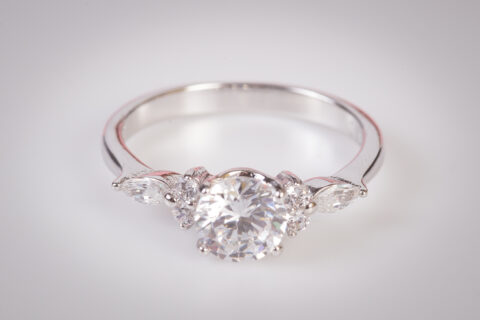
That beautiful gold necklace sitting in your jewelry box might be worth more than you think. The diamond ring you inherited from your grandmother could have value beyond its sentimental significance. Even a broken bracelet or a mismatched pair of earrings may contain precious metals that are worth real money.
But how do you know what your jewelry is actually worth?
For many Anaheim residents, understanding jewelry value becomes important when they are considering selling an unwanted piece, securing a short-term pawn loan, or simply learning more about something they own.
At Lincoln Pawn in Anaheim, California, jewelry is more than something beautiful to wear. It can also represent financial flexibility, an opportunity to turn unused possessions into cash, and a practical resource when unexpected expenses arise.
Understanding how jewelry is evaluated can help you make informed decisions and recognize the potential value hiding in your jewelry box.
The Difference Between What Jewelry Costs and What It Is Worth
One of the biggest surprises people experience when evaluating jewelry is discovering that the original purchase price and current resale value can be very different.
Imagine purchasing a diamond ring for $3,500 several years ago. That price included more than the diamond and precious metal. It also reflected the jewelry store’s overhead, marketing, craftsmanship, retail markup, and other business expenses.
When that same ring is evaluated for resale or a pawn loan, the calculation changes.
A professional evaluation considers the materials, condition, craftsmanship, desirability, and current market demand. The question is no longer simply what the jewelry originally cost. Instead, it becomes what a buyer would reasonably pay for it today.
This distinction is especially important when reviewing inherited jewelry, older engagement rings, or pieces purchased many years ago.
A high original price does not guarantee a high resale offer. Likewise, jewelry that was relatively inexpensive decades ago may contain precious metals that have become more valuable.
Understanding this difference helps Anaheim customers approach jewelry evaluations with realistic expectations.
Gold Purity: Why Karats Make a Difference
Gold is one of the most important factors in determining the value of many jewelry pieces.
However, not all gold jewelry contains the same amount of pure gold.
Gold purity is measured in karats, and those numbers directly affect the amount of precious metal contained in a piece.
Common gold classifications include:
- 10-karat gold: Contains approximately 41.7% pure gold.
- 14-karat gold: Contains approximately 58.3% pure gold.
- 18-karat gold: Contains 75% pure gold.
- 22-karat gold: Contains approximately 91.7% pure gold.
- 24-karat gold: Considered nearly pure gold.
For example, two necklaces might look almost identical, but if one is 10-karat gold and the other is 18-karat gold, their precious metal values could be substantially different.
Weight matters, too.
A heavy 14-karat gold bracelet may contain more actual gold than a lightweight 18-karat necklace. That is why professional jewelry evaluations consider both purity and weight rather than relying on appearance alone.
Lincoln Pawn evaluates gold jewelry, including rings, necklaces, bracelets, earrings, and other pieces. Customers who are uncertain about their jewelry’s metal content can bring it in for testing.
What About White Gold and Platinum?
In our previous article, White Gold or Platinum? How to Tell the Difference and Why It Matters in Anaheim, we explored how these popular jewelry metals differ.
That distinction matters when determining value.
White gold is an alloy containing gold mixed with other metals, while platinum jewelry generally contains a high percentage of platinum.
Although the two metals can look similar, they have different compositions, densities, and market prices.
A platinum ring may weigh more than a similarly sized white gold ring, but greater weight does not automatically mean a higher resale offer. The purity of the metal, current market prices, and overall desirability all influence the evaluation.
The lesson is simple: never assume you know a piece’s value based only on its color or appearance.
Diamond Jewelry: More Than Just Sparkle
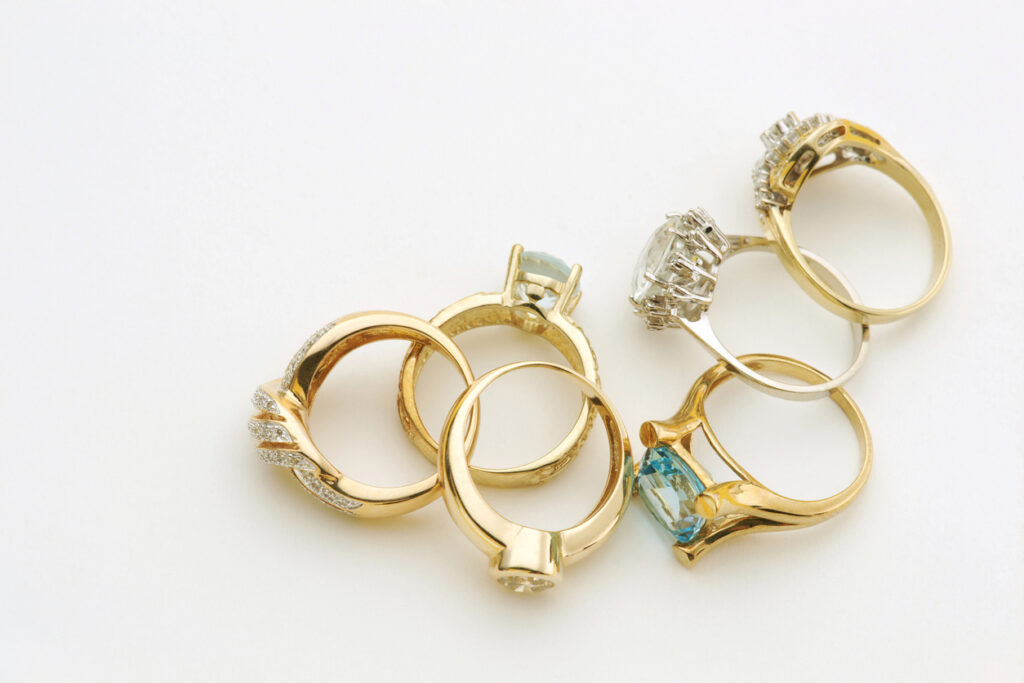
Diamonds introduce another layer of complexity into jewelry evaluations.
Many people assume that a larger diamond is automatically worth more than a smaller one. Although size matters, diamond value depends on several characteristics.
The jewelry industry commonly uses the Four Cs:
Carat Weight: This measures the diamond’s weight. Larger diamonds are often more valuable when other quality factors are comparable.
Cut: Cut quality influences how effectively a diamond reflects light, contributing to its brilliance and sparkle.
Color: Most traditional white diamonds are evaluated according to how little body color they display.
Clarity: This measures internal inclusions and external blemishes that may affect appearance and value.
Two diamonds of the same carat weight can have dramatically different values because of their cut, color, and clarity.
Natural and laboratory-grown diamonds also have different resale markets. Both are real diamonds, but their market values and demand can differ significantly.
At Lincoln Pawn, the jewelry team includes a Diamond Graduate from the Gemological Institute of America (GIA), providing specialized diamond knowledge during evaluations when it is provided by the original seller.
That expertise can be particularly helpful when evaluating engagement rings, wedding sets, diamond earrings, and inherited pieces.
Does the Brand Name Affect Jewelry Value?
Sometimes the name behind a piece of jewelry can be almost as important as the materials used to create it.
Certain designer jewelry brands have established strong recognition in the secondary market.
A signed designer bracelet, for example, may attract interest beyond its gold content because buyers value the brand, design, authenticity, and craftsmanship.
However, a designer name does not automatically guarantee a premium.
The condition of the piece, authenticity, popularity of the design, and availability of comparable jewelry all matter.
Original packaging, receipts, certificates, and other documentation can help establish a piece’s identity and authenticity.
If you own designer jewelry and are considering selling or pawning it in Anaheim, bring any supporting documentation you have.
Even without the original box or paperwork, your jewelry may still have value.
Can Broken or Damaged Jewelry Be Worth Money?
Absolutely.
One of the most common misconceptions about jewelry is that it must be wearable to have value.
A broken gold chain may still contain valuable gold. A ring with a missing stone may still have precious metal value. A single gold earring can be worth evaluating even when its matching partner has disappeared.
Consider the jewelry people often keep tucked away:
- Broken gold necklaces and bracelets
- Single earrings and mismatched pairs
- Bent or damaged rings
- Outdated jewelry styles
- Jewelry with missing gemstones
- Unwanted wedding bands
- Pieces inherited from relatives
Some items may be valued primarily for their metal content, while others may have additional resale potential.
Before throwing away damaged jewelry or paying to have it repaired, consider having it professionally evaluated.
Repairing an item solely to sell it is not always financially worthwhile. In some situations, the repair cost may exceed any increase in resale value.
Knowing the item’s current value can help you decide whether to repair, keep, pawn, or sell it.

How Current Precious Metal Markets Affect Jewelry Value
Gold, silver, and platinum are traded in global markets, and their prices fluctuate.
Economic uncertainty, investor demand, currency movements, industrial activity, and international events can influence precious metal prices.
This means that the underlying metal value of jewelry may change over time.
For example, a gold bracelet evaluated several years ago might receive a different offer today, even if its condition has not changed.
However, an increase in the market price of gold does not necessarily translate into an identical percentage increase in a jewelry resale offer.
The amount of pure gold, refining considerations, resale demand, and the condition of the jewelry still matter.
For Anaheim residents who have held onto gold jewelry for many years, periodically reviewing its value can provide useful information.
You do not have to sell something simply because you have it evaluated. Sometimes understanding what you own is valuable enough.
Should You Pawn Your Jewelry or Sell It?
Once you understand what your jewelry may be worth, the next question is what to do with it.
At Lincoln Pawn, customers can explore two different options: selling their jewelry outright or using eligible jewelry as collateral for a pawn loan.
Option One: Sell Jewelry for Cash
Selling may make sense when you no longer want or need an item.
Perhaps you have an outdated gold necklace, jewelry from a previous relationship, or inherited pieces that do not match your personal style.
Selling allows you to exchange the item for cash without taking on a repayment obligation.
Once the transaction is completed, ownership transfers to the buyer.
For customers who are decluttering, downsizing, or converting unused valuables into money, selling may be the more practical choice.
Option Two: Use Jewelry for a Pawn Loan
A pawn loan works differently.
Instead of selling your jewelry, you temporarily use it as collateral for a loan.
The jewelry remains yours while it is held as collateral, and you have the opportunity to reclaim it by repaying the loan and applicable charges according to the agreement.
This can be useful when you need money for an unexpected expense but do not want to permanently part with a meaningful item.
Imagine that your vehicle needs an unexpected repair. You own a gold bracelet that has sentimental value, but you would rather not sell it.
A pawn loan may provide access to money while preserving the possibility of getting your bracelet back.
Lincoln Pawn offers collateral loans. Interest and applicable fees depend on the loan amount and terms, so customers should review the full repayment amount before accepting an offer.
If a loan is not redeemed within the required period and applicable notice requirements are completed, the collateral can be forfeited.
The important consideration is whether you can realistically repay the loan and whether keeping the jewelry is important to you.
What Happens During a Jewelry Evaluation at Lincoln Pawn?
If you have never visited a pawn shop to have jewelry evaluated, you may wonder what to expect.
The process is generally straightforward.
Step 1: Bring Your Jewelry to the Store
Gather the items you would like evaluated. You do not need to know their exact purity, weight, or value before visiting.
Step 2: Have the Jewelry Examined
The team examines relevant characteristics, including metal type, purity, weight, gemstones, condition, and potential resale demand.
Step 3: Review the Offer
Based on the evaluation, Lincoln Pawn can discuss an offer to purchase the item or an available collateral loan.
Step 4: Decide What Works for You
You can consider whether selling or pawning makes sense for your circumstances.
Lincoln Pawn advertises free, no-obligation jewelry testing and evaluations. There is no requirement to accept an offer simply because you asked about an item’s value.
For customers proceeding with a transaction, a valid identification document is required.
Five Ways to Prepare Before Having Your Jewelry Evaluated
A little preparation can make the experience easier.
1. Look for markings. Check inside rings, on necklace clasps, or on bracelet closures for markings such as 10K, 14K, 18K, 585, 750, or PT950. These can provide clues about metal content, although markings alone do not prove authenticity.
2. Gather documentation. Bring receipts, diamond grading reports, authenticity documents, or original packaging when available.
3. Avoid unnecessary repairs. A broken chain or damaged setting may still have value. Ask for an evaluation before spending money on repairs.
4. Understand your goal. Decide whether you are primarily interested in selling, obtaining a temporary loan, or simply learning what you own.
5. Ask questions. A professional evaluation should help you understand the important characteristics of your jewelry and the factors influencing an offer.
Taking these steps can make you more confident about your options.
Why Local Jewelry Expertise Matters in Anaheim
There are many ways to research jewelry values online, but internet estimates have limitations.
An online calculator might estimate the metal content of a gold ring based on its weight and purity. However, it cannot physically verify the item, assess gemstone quality, or determine its condition.
Similarly, online listings show what sellers are asking for comparable jewelry, not necessarily what buyers are actually paying.
A local evaluation gives you the opportunity to have your jewelry examined in person and ask questions about its characteristics.
Lincoln Pawn has more than 25 years of combined jewelry appraisal experience on its team and handles gold, silver, platinum, diamonds, and other valuable merchandise.
For Anaheim residents, that means having a nearby resource when they want to explore the value of jewelry without mailing it to an unfamiliar buyer.
Whether you live in Anaheim, Buena Park, Fullerton, Cypress, or another nearby Orange County community, an in-person visit can help you understand your options.
Frequently Asked Questions About Jewelry Value
Is 14-karat gold worth pawning?
Yes. Fourteen-karat gold contains approximately 58.3% pure gold and is commonly used in jewelry. Its potential pawn value depends on weight, current market conditions, and the item’s other characteristics.
Can I sell jewelry without the original receipt?
In many cases, yes. Original receipts can be helpful, but they are not always necessary. Valid identification and compliance with applicable transaction requirements are still important.
Is an old engagement ring worth anything?
It may be. The value depends on the metal, diamond or other gemstones, condition, and resale demand. An older ring may have value even if its style is no longer fashionable.
Will cleaning my jewelry increase its value?
Gentle cleaning may improve its appearance, but it does not change the amount of precious metal or the quality of the gemstones. Avoid harsh chemicals or aggressive polishing that could damage the piece.
Do I have to sell my jewelry after an evaluation?
No. Lincoln Pawn offers no-obligation evaluations, allowing you to learn more about your jewelry before deciding what to do.
Your Jewelry May Hold More Possibilities Than You Realize
Jewelry often represents important moments in our lives. Engagements, anniversaries, birthdays, graduations, and family traditions can all be connected to the pieces we own.
But jewelry can also represent something practical: financial options.
A necklace that has not been worn in years, a broken gold bracelet, or a diamond ring tucked away in a drawer may have value worth exploring.
Knowing what your jewelry is worth does not mean you have to part with it. It simply means you have more information to make the decision that is right for you.
At Lincoln Pawn in Anaheim, the goal is to help customers understand their valuables and explore practical options for selling or securing a collateral loan.
Whether you are curious about an inherited piece, considering selling unwanted gold, or looking for a short-term loan using jewelry you already own, the first step is understanding its value.
Visit Lincoln Pawn in Anaheim for a Free Jewelry Evaluation
Have gold, platinum, silver, diamonds, or other jewelry you would like evaluated?
Bring your items to Lincoln Pawn and speak with the experienced team about their potential value.
Lincoln Pawn Shop
2673 W. Lincoln Avenue
Anaheim, CA 92801
Phone: (714) 229-5864
Website: https://pawnanaheim.com
Store Hours:
Monday–Friday: 10:00 AM–6:00 PM
Saturday: 10:00 AM–5:00 PM
Sunday: Closed
Discover what your jewelry may be worth, explore your options, and make an informed decision with help from Lincoln Pawn.
Pawn loans are subject to applicable California regulations, eligibility requirements, interest, and fees. Review all loan disclosures and repayment terms before accepting a collateral loan.